The Growing Stakes of Data Management in Indianapolis
For businesses operating in the Crossroads of America, data is the engine that drives growth. From the bustling tech corridor on Georgia Street to the manufacturing hubs surrounding the 465 loop, Indianapolis companies rely on digital information to serve clients, manage supply chains, and process payroll. However, as our reliance on data grows, so does the risk of losing it.
Data loss isn’t just a technical glitch; it is a business crisis. Whether it’s a sudden hardware failure or a sophisticated cyberattack, the inability to access your files can bring operations to a grinding halt. In this expanded guide, we will explore why data recovery is more critical than ever and how local IT consulting can provide the roadmap to resilience.
Understanding the True Cost of Downtime
When Indianapolis business owners think about data loss, they often focus on the cost of the hardware. However, the true “price tag” of a data disaster is found in downtime. According to industry research, the average cost of downtime for a small-to-medium business can range from $10,000 to $50,000 per hour depending on the industry.
Beyond the immediate loss of revenue, there is the “invisible” cost of reputation damage. If your clients find out their data was lost or that you cannot fulfill orders because your systems are down, trust evaporates. Rebuilding that trust takes years; losing it takes seconds. By investing in comprehensive managed IT services, businesses can mitigate these risks before they become catastrophic.
The Most Common Causes of Data Loss in the Modern Era
To protect your business, you must first understand the enemy. Data loss in Indianapolis typically stems from four primary sources:
- Hardware Failures: Even the best servers and hard drives have a shelf life. In many cases, hardware simply wears out. Without a redundant system in place, a single mechanical failure can wipe out years of archives.
- Human Error: This remains the leading cause of data loss. An employee accidentally deleting a folder, spilling coffee on a laptop, or incorrectly configuring a cloud database can lead to immediate outages.
- Cybercrime and Ransomware: Indianapolis has seen a surge in localized cyber threats. Ransomware encrypts your data and holds it hostage, demanding payment for the key. Without a clean backup, many businesses are forced to pay the hackers—and even then, there is no guarantee the data will be returned.
- Natural Disasters: While we don’t have to worry about hurricanes, Indiana’s volatile weather—including tornadoes and severe thunderstorms—can lead to power surges and flooding that destroy physical infrastructure.
The Critical Role of IT Consulting in Prevention
Many businesses attempt to handle their backups “in-house” using consumer-grade external hard drives or basic cloud storage. Unfortunately, these solutions often fail when they are needed most. This is where professional IT consulting becomes invaluable.
A consultant doesn’t just sell you software; they build a strategy. They perform a “gap analysis” to see where your vulnerabilities lie. For example, do you have an “air-gapped” backup that is disconnected from your network? If not, a ransomware virus can infect your backups at the same time it infects your live data. Working with an expert team like Leap Managed IT ensures that your strategy accounts for these sophisticated modern threats.
Why “The Cloud” Is Not a Magic Bullet
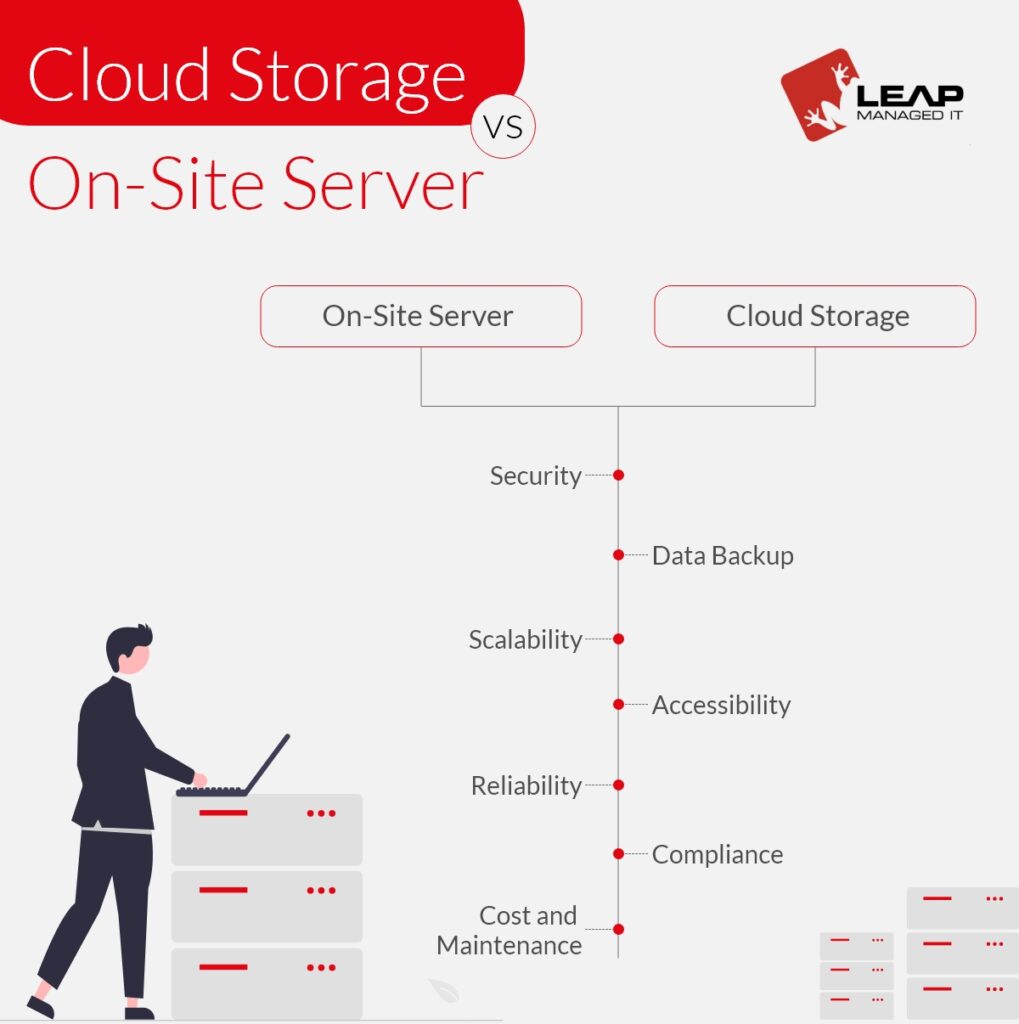
There is a common misconception that if your data is “in the cloud” (like in Microsoft 365 or Google Workspace), it is automatically backed up. This is false. Most cloud providers operate under a “Shared Responsibility Model.” They guarantee the availability of the infrastructure, but they do not guarantee the protection of your data.
If an employee deletes an email in Outlook and you don’t realize it for 60 days, that data is likely gone forever unless you have a third-party backup solution. A robust data recovery plan must include cloud-to-cloud backup to ensure that your SaaS (Software as a Service) data is just as secure as the files on your local server.
Building a Disaster Recovery Plan (DRP)
A Disaster Recovery Plan is a formal document that outlines exactly what happens when things go wrong. Every Indianapolis business should have a DRP that answers the following questions:
- Who is in charge? Define the “Recovery Team” and their contact information.
- What is the RTO (Recovery Time Objective)? How long can your business realistically be down before the damage is irreparable?
- What is the RPO (Recovery Point Objective)? How much data can you afford to lose? Is a backup from 24 hours ago acceptable, or do you need point-in-time recovery from 15 minutes ago?
- Where is the data stored? Following the 3-2-1 rule is essential: 3 copies of your data, on 2 different media types, with 1 copy stored off-site.
For many local firms, the best way to start this process is through a complimentary technology assessment to identify which assets are currently at risk.
The Impact of Compliance and Legal Obligations
For businesses in the healthcare, legal, or financial sectors in Indianapolis, data loss isn’t just a business problem—it’s a legal one. Regulations such as HIPAA, FINRA, and GDPR require businesses to maintain strict data integrity and availability.
If you lose patient records or client financial data and cannot recover them, you could face massive fines and legal action. IT consulting professionals specialize in aligning your technology with these regulatory requirements, ensuring that your backup methods meet the encryption and retention standards required by law.
Local Expertise Matters: The Indy Advantage
While there are national IT firms, there is a distinct advantage to working with a local Indianapolis partner. When a server fails at 2:00 AM on a Tuesday, you don’t want to be calling a call center in a different time zone. You want a team that understands the local landscape, can get a technician on-site if necessary, and understands the specific challenges facing Indiana businesses.
Leap Managed IT prides itself on being a part of the Indianapolis community. We don’t just provide technical support; we provide peace of mind. We know that when your business succeeds, our city succeeds.
Testing: The Most Overlooked Step in Data Recovery
The biggest mistake a business can make is assuming their backups are working because they haven’t seen an error message. A backup is only as good as its last successful restore.
Professional data management involves “fire drills.” Once a quarter, your IT team should attempt to restore random files or even spin up a virtual version of your entire server to ensure the data is uncorrupted and accessible. If you wait until an actual emergency to test your recovery process, you may find out too late that your backup files were corrupted months ago.
Conclusion: Don’t Wait for the “Blue Screen”
Data loss is an inevitability of the digital age, but it doesn’t have to be a death sentence for your business. By shifting from a reactive mindset to a proactive one, you can ensure that your company remains resilient regardless of what the future holds.
Investing in IT consulting and a dedicated recovery partner is the best insurance policy you can buy for your business’s future. Whether you are a small startup in Broad Ripple or an established firm in the Salesforce Tower, your data is your legacy. Protect it.
Ready to secure your business’s future? Contact the experts at Leap Managed IT today to build a data recovery plan that never fails.
Key Takeaways for Indianapolis Business Owners:
- Audit Your Backups: Ensure you are following the 3-2-1 rule.
- Prioritize Security: Use IT consulting to defend against ransomware.
- Test Regularly: Never assume a backup is working without a successful restore test.
- Think Local: Partner with an Indianapolis team that can provide rapid, on-site response.